Somewhere between the accepted offer and the closing table, most sellers in Hancock Park discover a rule they never knew existed. It doesn't show up on the listing sheet. It doesn't come up at the open house. It surfaces when an inspector, an escrow officer, or a buyer's agent asks whether the property has a current RECO certificate on file. For a lot of Chico neighborhoods, that question is a coin flip. In Hancock Park, it's close to a certainty.
The reason comes down to one number: the median home in Hancock Park was built in 1984. That single fact determines whether a seller here spends a quiet afternoon signing paperwork or scrambles to book an inspector and order low-flow fixtures before an escrow deadline.
The Ordinance That Only Appears at the Point of Sale
Chico has had a Residential Energy Conservation Ordinance on the books since 1991, administered through the city's Residential Retrofit Program under Municipal Code 16.60. The mechanism is simple and easy to miss: it doesn't apply while you own the home. It applies when the home changes hands. Every home, condominium, or apartment building built before July 1, 1991 has to meet a specific set of energy and water conservation measures before it can be sold or transferred, according to the City of Chico's own program page.
That point-of-sale design is exactly why so many owners never think about it until they're already under contract. There's no annual inspection, no renewal notice in the mail, nothing that forces the issue while you're just living in the house. The ordinance sits dormant for years, then activates the moment a sale is in motion, at precisely the time when a seller has the least appetite for a surprise.
Why Hancock Park Sits Squarely Inside the Trigger Window
Chico has plenty of housing stock built well after 1991, where this ordinance is a non-issue. Hancock Park isn't one of those neighborhoods. The tract was originally built by developer John Drake, with a handful of more energy-efficient homes added later by Jay Halpert of Shastan Homes. With a median construction year of 1984, more than half the homes in the neighborhood predate the ordinance's cutoff by close to a decade.
That's the part a median sale price never tells you. Two neighborhoods can post similar list prices and similar square footage, but if one was built mostly in the 1970s and 80s and the other went up after 2000, only one of them comes with a mandatory pre-closing checklist attached to the sale itself. In Hancock Park, that checklist is the default, not the exception.
What RECO Actually Asks a Seller to Do
The measures themselves aren't dramatic, but they aren't nothing either. According to a local breakdown of the ordinance's requirements, a compliant home needs:
| Requirement | Standard |
|---|---|
| Attic insulation | Minimum R-30, in areas with at least 30 inches of headroom |
| Weather stripping | Caulking and sealing of major cracks or openings |
| Showerheads | Maximum flow rate of 3.0 gallons per minute |
| Faucets | Maximum flow rate of 2.75 gallons per minute |
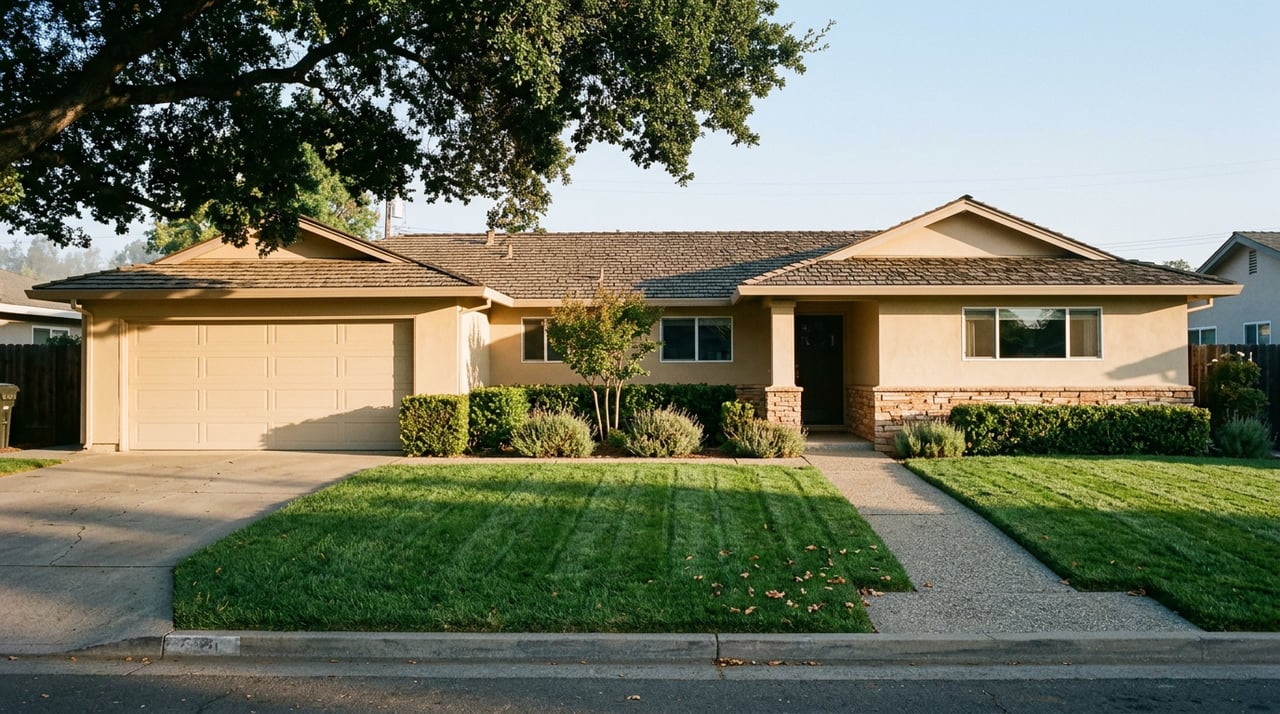
None of these are luxury upgrades. They're the kind of thing a homeowner might already have addressed during a kitchen or bath remodel, or might have never touched since the day the house was built. The attic insulation line is the one worth sitting with. A lot of single-story ranch homes from the John Drake era have shallower attic clearance than newer construction, which matters because the R-30 standard is tied to spaces with at least 30 inches to work in. Whether that clearance exists, and whether the current insulation already clears the bar, is not something a seller can answer from memory. It requires someone to go up there and look.
Where the Original Homes and the Later Ones Diverge
This is also where Hancock Park's own history creates uneven outcomes within the same few blocks. The neighborhood wasn't built as one uniform batch. The bulk of it came from John Drake's original development, but Jay Halpert of Shastan Homes added a run of homes built with energy efficiency specifically in mind. A house from that later group may already meet or exceed RECO's thresholds without any additional work. A house from the earlier run, never updated, is far more likely to need attic work, new showerheads, and new faucet aerators before a certificate can be issued.
The practical result is that two neighbors on the same street can face completely different pre-listing timelines, and neither one knows which category their home falls into until an inspection happens. Guessing based on the age of the neighborhood as a whole isn't good enough. The compliance status has to be established at the level of the individual house.
Building the Timeline Before You List, Not After You Accept an Offer
Because RECO certification is required at the point of sale, the sellers who avoid last-minute delays are the ones who treat it as a pre-listing task rather than an escrow task. The City's Building Official authorizes qualified inspectors to conduct these energy conservation inspections and certify compliance, and Chico has local firms built around exactly this kind of work. Butte Inspections, for instance, is run out of Chico by John Schram, who brings more than three decades of construction trade experience to residential inspection work in the area. Getting a property looked at before it hits the market means any insulation or fixture gaps get identified and closed on the seller's schedule, not on a buyer's inspection deadline.
It's also worth thinking about plumbing fixtures as a package rather than a checkbox. Chico's municipal water runs moderately hard, and local plumbers note it can leave mineral buildup on older fixtures over time. A seller who's already swapping in low-flow showerheads and faucet aerators to meet RECO's gpm limits is in a good position to address any scale buildup or reduced flow in the same visit, rather than treating the compliance work and the maintenance work as two separate projects months apart.
None of this changes what a Hancock Park home is worth. It changes how smoothly the sale gets there. A seller who orders the inspection in the weeks before listing has room to fix what needs fixing without any pressure. A seller who waits until an accepted offer is sitting on the table is negotiating repairs and certification on somebody else's clock.
FAQ
Does every home in Hancock Park need a RECO inspection to sell? Any home built before July 1, 1991 falls under the ordinance. Given the neighborhood's median construction year of 1984, that covers most of Hancock Park, though homes from the later Shastan Homes phase built with efficiency in mind may already meet the standard.
Who can certify that a home is compliant? The City's Building Official authorizes qualified individuals to conduct these energy conservation inspections and certify compliance under the Residential Retrofit Program.
What happens if a seller skips it? The ordinance requires compliance before a covered property is sold or transferred, which means it surfaces during escrow whether a seller has planned for it or not. Handling it before listing avoids that scramble entirely.
Are the required upgrades expensive? Weather stripping and low-flow fixtures are generally modest costs. Attic insulation can be more involved depending on the home's existing insulation and available headroom, which is why a pre-listing inspection is worth the time before assuming either way.
If you're weighing a sale in Hancock Park and want to know exactly where your home stands before a buyer's inspector tells you, Lora Trenner can help you build a listing timeline that accounts for RECO from day one instead of discovering it in escrow. Start with a free home valuation or take a look at the full seller's guide for what else to line up before your Hancock Park home hits the market.