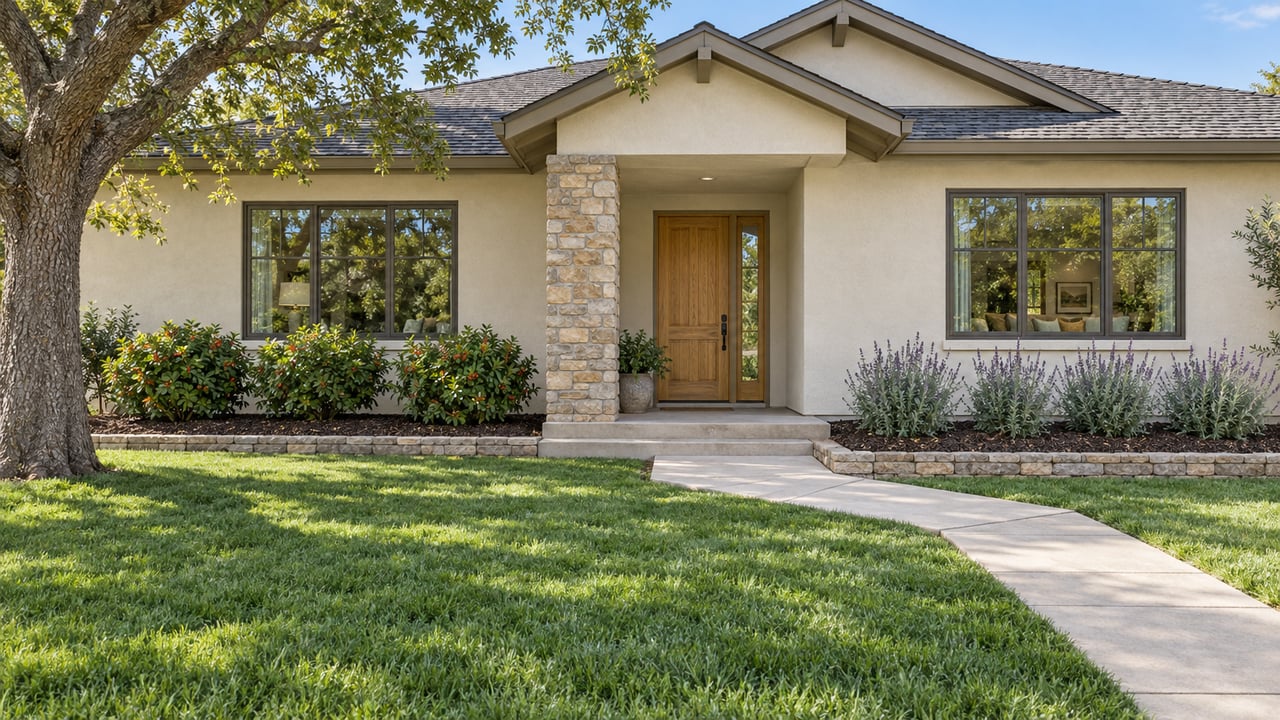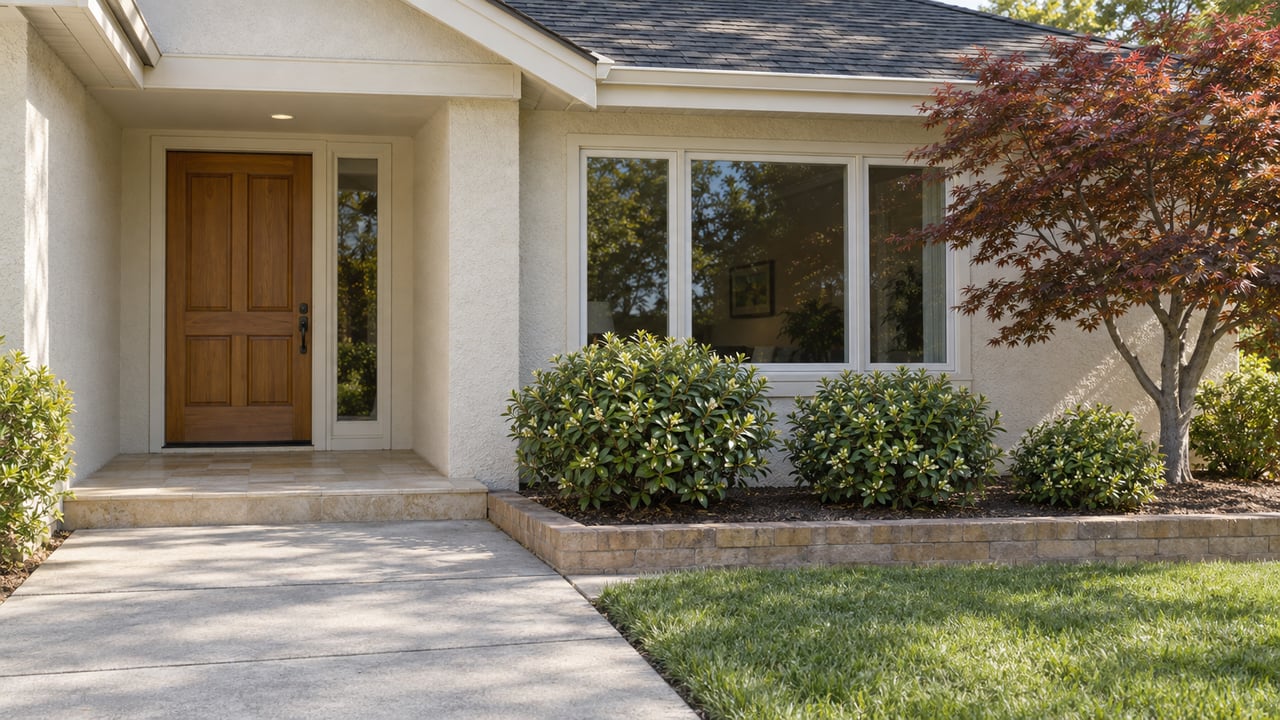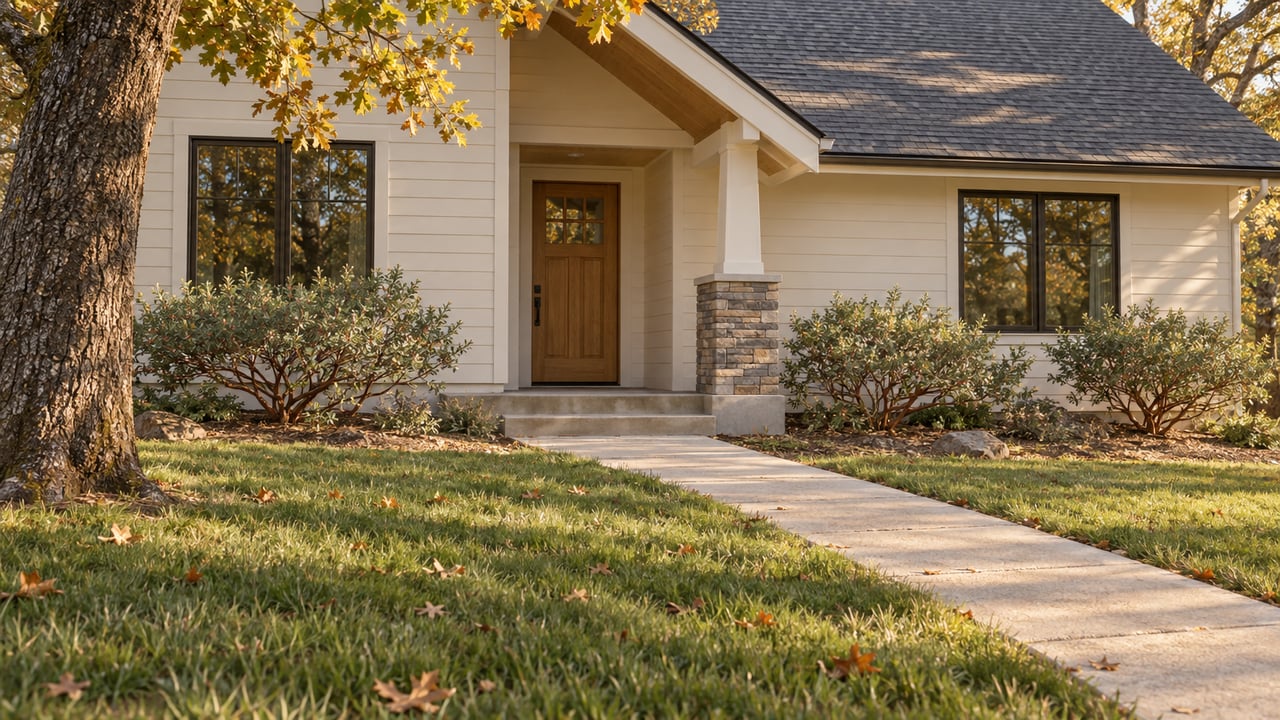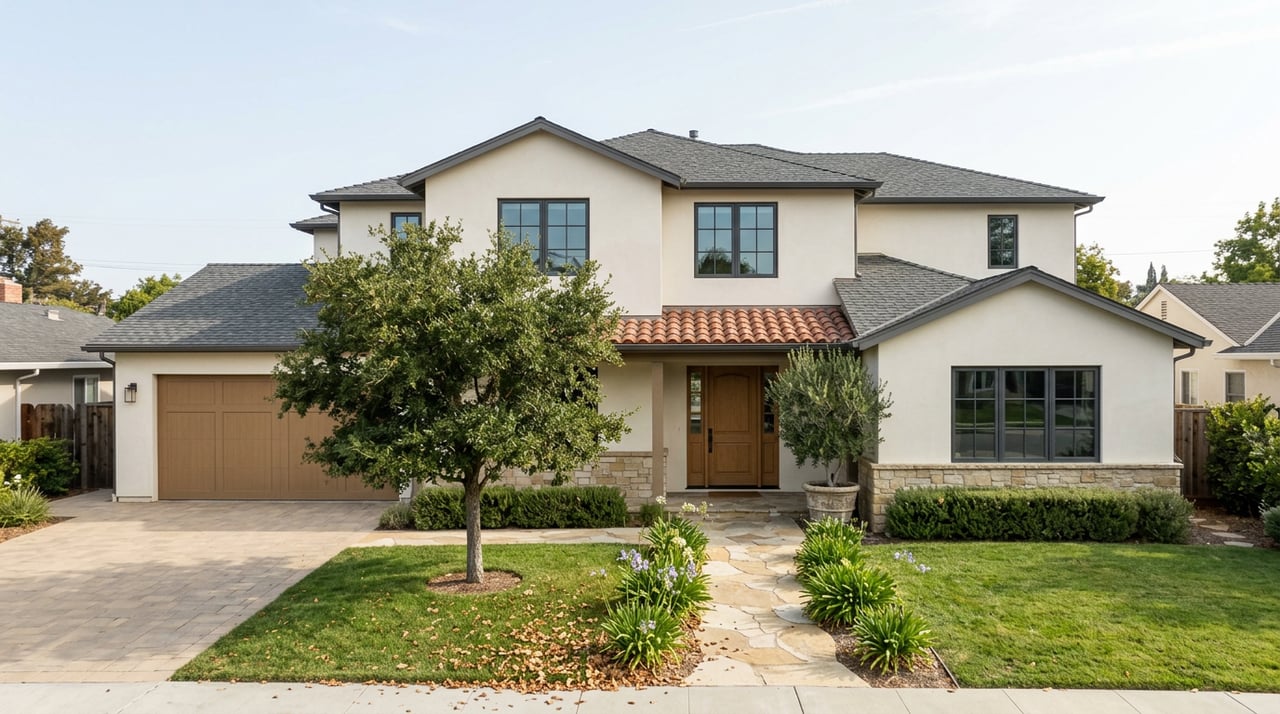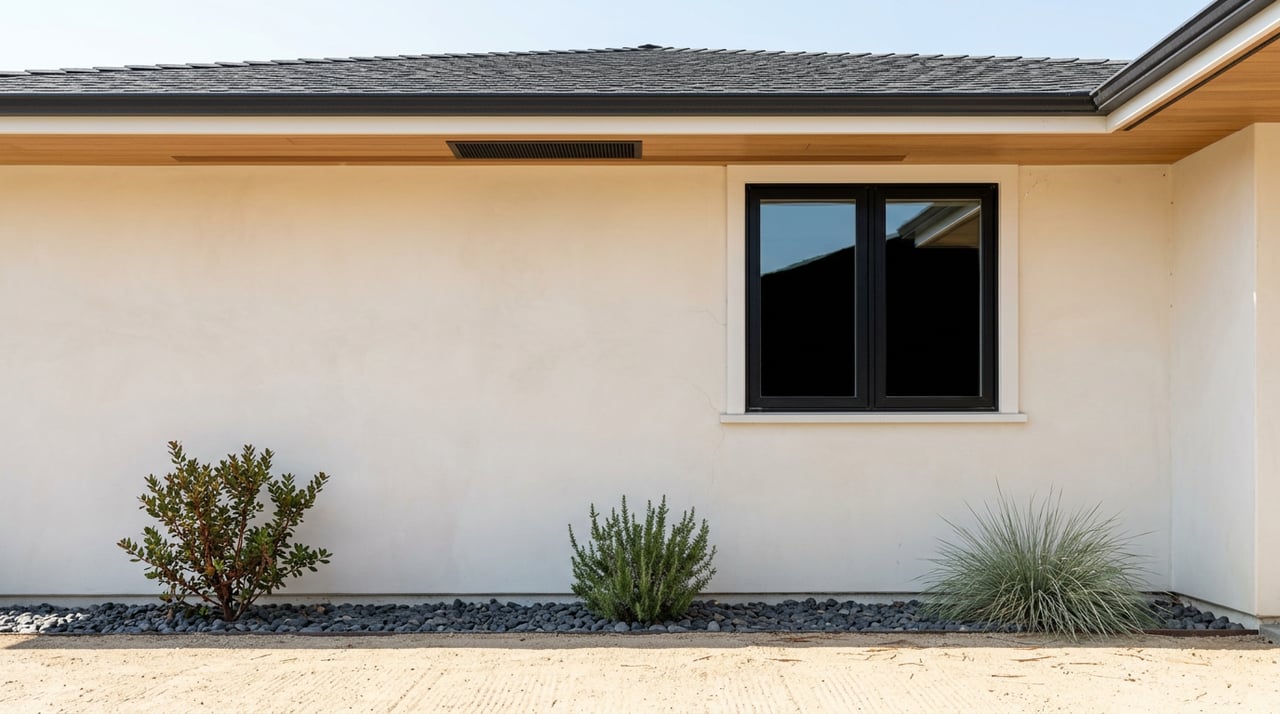
Two nearly identical three-bedroom homes sit a block apart on the Ridge. Same square footage, same lot size, same asking price. One closes in 30 days. The other loses two buyers in escrow and finally sells for less. The difference is not the kitchen finishes or the view. It is a piece of paper called an insurance quote.
In Paradise this year, the insurance number has quietly overtaken the list price as the figure that decides whether a deal closes. Buyers who once compared mortgage payments now compare annual premiums first, and the gap between a hardened rebuild and an older non-hardened home has widened into something a spreadsheet cannot hide.
The number behind the number
Portal medians tell one story about Paradise. Redfin put the town's median sale price at about $630,000 for the three months ending September 2025, with per-square-foot values around $375. Realtytrac's estimated median value sits closer to $418,750 across the broader 95969 inventory. Both numbers are real. Neither captures what a buyer is actually signing up for.
The hidden line item is the annual insurance premium, and in 2026 it is moving fast. The California FAIR Plan, the state's insurer of last resort, has grown from roughly 124,000 policies in 2019 to 684,388 total policies in force as of March 2026, with $750 billion in total exposure. Paradise sits inside the corridor driving that growth. The plan provides basic fire, lightning, and smoke damage coverage, but does not include tree damage, water damage, theft, or liability coverage, and residential policies are capped at $3 million. To get anything resembling a standard homeowners policy, a FAIR Plan policyholder has to add a Difference in Conditions wrap.
That wrap is where a lot of Paradise buyers get surprised at the closing table. California Department of Insurance data shows the proportion of new and renewed DIC policies to the number of FAIR Plan policies has been about 50%, meaning for every two FAIR Plan policies written, one of those policyholders also elected to purchase DIC coverage. Half of FAIR Plan households are underinsured against theft, water damage, and liability without knowing it. A lender catching this mid-escrow can pause a loan for weeks.
What is changing in 2026
The insurance backdrop is shifting on almost a monthly cadence, and every shift lands in Butte County first.
- April 2026: The FAIR Plan's approved rate increase took effect. The FAIR Plan filed for a 35.8% average rate increase on September 29, 2025, requesting an effective date of April 1, 2026.
- October 15, 2026: A second adjustment is scheduled. FAIR Plan premiums will increase by an average of 29.8% statewide. However, the impact varies significantly by ZIP code. Wildfire-exposed ZIPs like 95969 will land above the average.
- January 1, 2026: Nine Lara-sponsored bills took effect, including the California Safe Homes Act (AB 888), a grant program for fire-safe roofs and mitigation, and the Insurance and Wildfire Safety Act (AB 1), which requires CDI to review and update wildfire safety regulations and mitigation discount frameworks.
- Sustainable Insurance Strategy: Under the SIS, participating insurers can use forward-looking catastrophe models and California-specific reinsurance costs in their rates. In the short term, premiums in fire-prone areas are expected to rise to reflect the actual cost of risk. In exchange, carriers must write at least 85% of their statewide market share in CDI-identified distressed ZIPs, which should increase voluntary-market availability over time.
- April 24, 2026: Travelers announced voluntary participation in the Sustainable Insurance Strategy and notified the CDI of its intent to expand California homeowners insurance availability. Travelers also expanded discounts for ember-resistant vents, Class A roofing, and defensible space mitigation.
State Farm General is still not writing new business in most of the state, and Allstate has not yet confirmed a filed SIS rate. That is why the practical question in Paradise is not "which carrier do I want" but "which carriers will look at my specific house at all."
Two Paradise homes, two insurance realities
Here is how the split shows up when a buyer runs quotes on the same weekend.
| Home profile | Likely coverage path | What that means at closing |
|---|---|---|
| Post-Camp Fire rebuild, Chapter 7A compliant, Class A roof, ember-resistant vents, defensible space | Admitted carrier under SIS, or CSAA with hardening discount | Access to CSAA's "My Home Hardening" discount of up to 12.5% and a guarantee to renew policies for at least three years for homeowners earning the IBHS Wildfire Prepared Home designation. Standard HO-3 features. Faster lender approval. |
| Older Ridge home, wood shake or unrated roof, unscreened vents, heavy fuel within 30 feet | FAIR Plan plus DIC wrap | Named-perils fire coverage only, with a separate DIC policy for water, theft, and liability. Higher combined premium. Longer underwriting timeline. |
Local insurance broker Dawn Foster of Paradise made the same point in a March 2026 HelloNation piece, where she noted that rebuilding experience in Paradise has shown why coverage limits must be reviewed carefully, and that labor shortages, higher material prices, and new building codes have pushed reconstruction costs upward, so a dwelling limit that once seemed sufficient may not cover the cost of rebuilding after a major loss. Translation: even a hardened rebuild needs a fresh replacement-cost check every renewal.
Why rebuilds are pricing above the median
Portal medians average every roof in town. Buyers writing offers in 2026 are not averaging anything. They are sorting.
A hardened rebuild with an insurable roof, screened vents, and documented defensible space is a shorter conversation with a lender and a smaller line item on a monthly budget. An older cabin-style home on a heavily wooded lot is not less desirable in itself, but it is a longer conversation with three brokers and a bigger check every April. That structural friction is what pulls comparable-looking homes into two separate price tracks even when their MLS descriptions read the same.
That is also why the September 2025 median of $630,000 is not a ceiling for the top tier or a floor for the bottom. The number is an artifact of a bimodal market. Reading it as a single trendline is how buyers overpay for the wrong risk profile.
Local pressure, federal ask
Insurance affordability has become a political question on the Ridge. Paradise Mayor Steve Crowder flew to Washington, D.C. to plead for federal dollars and policy fixes as California homeowners brace for another round of insurance hikes. The trip underscores how the Butte County town, still rebuilding from the 2018 Camp Fire, remains acutely exposed to premium shocks and insurer pullouts. Crowder has argued that federal help for fuel reduction, land management and targeted grants could blunt steep rate jumps for local residents. Whatever comes of those conversations, the practical calendar for a 2026 buyer or seller is set by the FAIR Plan and by which carriers are writing this month.
What buyers should do before writing an offer
The old sequence was tour, offer, inspect, finance. In Paradise in 2026, insurance moves up two spots.
- Ask for the current declarations page before you tour. Sellers who have shopped their policy recently save you a week. If the home is on the FAIR Plan, ask whether there is a companion DIC policy.
- Get a real quote from at least two brokers, not just a portal estimate. ZIP-level scoring inside 95969 varies block to block. A registered FAIR Plan broker can also tell you whether Travelers, CSAA, or Farmers is quoting your specific address this month.
- Verify the mitigation paperwork exists. Discounts hinge on documentation. The FAIR Plan offers verified mitigation discounts for documented home-hardening measures, but only if the seller can hand you the receipts, inspection reports, and roof rating.
- Build an insurance contingency into your offer. A financing contingency is not enough. A premium that comes back 40% higher than your pre-approval assumption can kill your debt-to-income ratio on the day of underwriting.
What sellers should do before listing
Sellers who treat insurance as a closing-week problem lose buyers. Sellers who treat it as a pre-listing marketing asset shorten their days on market.
- Pull a fresh quote before you price. If your home qualifies for admitted-market coverage under SIS, that fact belongs in the listing remarks. It is a real dollar advantage a buyer's agent can quantify.
- Document your hardening. Class A roof, ember-resistant vents, five-foot noncombustible zone, tempered dual-pane windows. Photos, invoices, permit numbers. Bundle it for the buyer's insurance broker.
- Consider a pre-listing inspection focused on wildfire hardening. It costs less than a price reduction and sells the story your MLS photos cannot.
- Ask your agent to line up two insurance broker contacts you can share with buyers. Removing friction from their quote process keeps offers alive.
If you want to see what your home might list for under current conditions, our instant home valuation tool is a starting point. For a deeper conversation about hardening documentation and buyer-ready listing prep, our sellers guide walks through the sequence.
FAQ
Is the FAIR Plan permanent coverage for a Paradise home? It is designed as a bridge, not a destination. As a not-for-profit insurer of last resort, the California FAIR Plan will insure a qualified property regardless of the property's exposure to brush or wildfire, serving as a temporary safety net for property owners until coverage becomes available in the traditional market. Under SIS, some Paradise ZIPs are starting to see admitted carriers quote again, especially for hardened rebuilds.
Do I actually need a DIC policy if I have the FAIR Plan? If you want protection similar to a standard homeowners policy, yes. A FAIR Plan policy alone leaves out water damage, theft, and liability. Lenders may accept FAIR-only for the fire portion, but the exposure to everything else falls on you.
Will the October 15, 2026 FAIR Plan adjustment hit every Paradise home the same way? No. 50% of policyholders will see increases between 30%–50%. 25% will see decreases, sometimes up to 80%, primarily in low-risk urban ZIP codes. The remaining 25% will see anything from modest increases to extreme spikes (50%–200%). Paradise addresses will sit toward the higher end. A fresh quote in September will beat a guess.
Where do I check what carriers are writing in my ZIP? Your insurance broker is the shortest path. The California Department of Insurance publishes the FAIR Plan Broker Finder and current SIS carrier list. Data on FAIR Plan exposure by ZIP is posted at cfpnet.com.
Every Paradise sale in 2026 is really two negotiations happening at once: one over price, one over insurability. Sellers who bring both to the table price stronger. Buyers who understand both write cleaner offers. If you are thinking about listing on the Ridge, or evaluating a rebuild that looks like a bargain until you run the premium, Lora Trenner can walk the numbers with you before you commit. Start with an instant home valuation and let us build the rest of the plan from there.